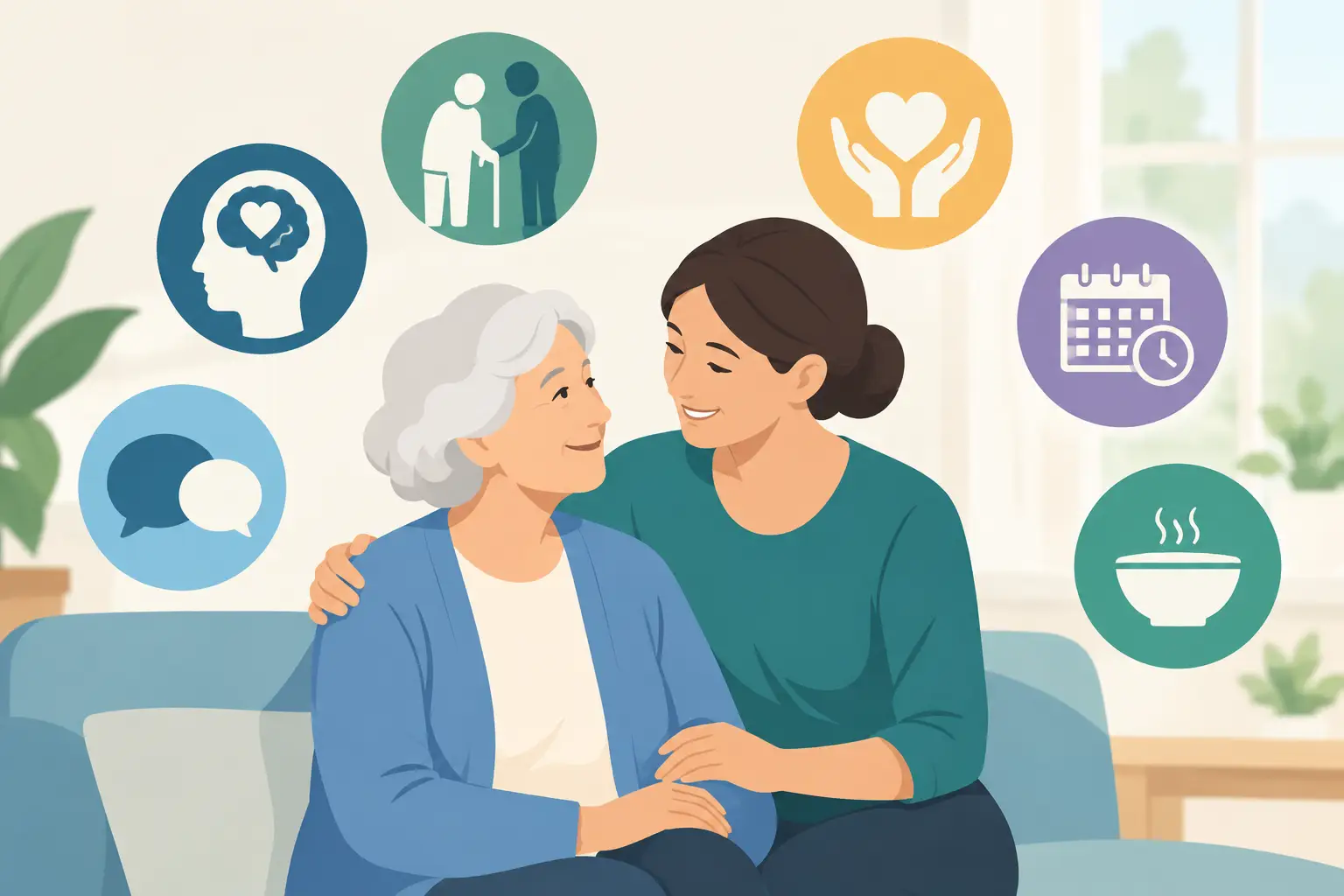
A person living with dementia may remember a childhood story clearly yet feel frightened by a change in the dinner routine. That is why the best helper skills dementia care requires go beyond cleaning, cooking, and completing a task list. Families need a helper who can provide steady, respectful support while noticing small changes in comfort, behavior, appetite, mobility, and daily function.
For many Singapore households, dementia care happens alongside work schedules, school routines, and the needs of several generations under one roof. A carefully matched live-in helper can bring welcome continuity, but the match should be based on temperament, practical capability, training, and clear family expectations.
The best helper skills for dementia care start with patience
Dementia can affect memory, judgment, language, mood, and a person’s sense of time and place. These changes are not the same every day. A senior may cooperate with bathing one morning and refuse it the next, or may repeatedly ask to go home while sitting in their own living room.
A suitable helper does not take these moments personally. She remains calm, speaks gently, and gives the person time to process what has been said. Rather than arguing about a mistaken belief, she can acknowledge the feeling and redirect attention to something reassuring, such as a familiar drink, music, photo album, or simple activity.
Patience should be visible in everyday behavior. During an interview, ask candidates how they would respond if an elderly person repeats the same question many times, refuses a meal, or becomes upset during personal care. Look for answers that show composure and kindness, not only a desire to finish the task quickly.
Communication that protects dignity
Clear communication is one of the most valuable skills in dementia support. A helper should use short sentences, offer one instruction at a time, and avoid giving too many choices at once. Instead of asking, “What would you like to wear today?” it may be easier to present two appropriate outfits and ask which one the senior prefers.
Tone and body language matter as much as words. Approaching from the front, making gentle eye contact, and explaining each step before assisting with dressing or bathing can reduce surprise and resistance. The aim is not to force cooperation. It is to help the person feel safe and involved.
Respect for privacy is equally important. Even when a family member needs close support, the helper should knock before entering a room, keep the senior appropriately covered during personal care, and avoid discussing the person’s condition casually with visitors or neighbors.
Language compatibility can make a real difference
A shared language is helpful, but familiarity can be just as meaningful. Some seniors respond best to a helper who learns a few preferred phrases, understands the foods they enjoy, or recognizes the customs that structure their day. Families should share these details during the onboarding period instead of assuming a helper will know them automatically.
If the senior speaks mainly Mandarin, dialect, Malay, Tamil, or another language, discuss communication needs early in the selection process. The best arrangement may involve a helper with relevant language ability, family members who prepare simple phrases and visual prompts, or both.
Safe routines matter more than perfect routines
Dementia care at home often depends on predictability. A consistent wake-up time, meal pattern, medication schedule, and bedtime routine can reduce confusion. The helper should be organized enough to follow the household plan, while remaining flexible when the senior is tired, anxious, or unwell.
Safety awareness is essential. This includes noticing wet floors, keeping walkways clear, checking that footwear is secure, supervising bathing when needed, and ensuring potentially dangerous items are stored safely. A helper should also understand that a person with dementia may try to leave home unexpectedly, turn on appliances without remembering, or take medication twice.
Families should not expect a helper to make medical decisions. Her role is to observe, provide routine support, and report concerns promptly. Sudden confusion, a fall, difficulty breathing, unusual weakness, fever, refusal to drink, or a significant change in behavior should be communicated to the employer and addressed according to the family’s medical plan.
Medication support needs clear boundaries
Medication is a common source of worry for families. A helper can assist with reminders and follow a written schedule when directed by the employer and healthcare team. However, instructions must be precise. Keep medicines in their original packaging, use a clear chart, and record when doses are given if the household routine requires it.
Do not rely on memory alone, especially when several family members are involved in caregiving. A simple handover system helps prevent duplicate doses, missed medication, and confusion about appointments.
Observation skills help families respond earlier
A capable dementia care helper notices patterns that busy family members may miss. Perhaps the senior is eating less at lunch, sleeping poorly, becoming more unsteady after a new medication, or becoming distressed at a certain time each afternoon. These observations can help the family and healthcare professionals understand what may be contributing to discomfort.
The helper does not need to diagnose a condition. What matters is accurate, factual reporting. “Mr. Tan had only a few bites of breakfast for three days” is more useful than “He does not like the food.” “She needed more help standing up this week” gives the family a clearer signal to monitor mobility.
Encourage a daily record covering meals, hydration, bowel movements if relevant, sleep, activities, mood changes, medication reminders, and any incidents. Keep it simple enough that it can be completed consistently. The record is not meant to turn home life into a clinic. It is a practical tool for continuity of care.
Personal care requires empathy and physical readiness
Helping with bathing, toileting, changing clothes, grooming, and mobility can be sensitive work. The right helper is comfortable with these responsibilities and understands that embarrassment, fear, or confusion may cause a senior to resist assistance.
Physical readiness also matters. If the care recipient needs transfer support, uses a wheelchair, or has a high fall risk, families should be candid about this during candidate matching. Experience with eldercare is valuable, but it should be matched to the actual level of assistance required. A helper who has supported an independent senior may not yet be prepared to manage complex mobility needs without additional training and supervision.
Ask about previous responsibilities in detail. Did the candidate prepare meals for an elderly person? Assist with bathing? Accompany them to appointments? Monitor wandering behavior? Work with a family care plan? Specific examples are more meaningful than a general statement that she has “elderly care experience.”
A good match also depends on the family
Even an experienced helper needs guidance when she joins a new household. Dementia care works best when employers explain the senior’s routines, triggers, preferences, medical appointments, mobility limitations, and calming strategies from the beginning.
Provide a written care guide with emergency contacts, daily schedules, food preferences, medication instructions, and clear boundaries on what the helper should do if the senior becomes distressed. Introduce tasks gradually where possible. In the first weeks, a family member can demonstrate personal-care routines and explain what has worked in the past.
Regular check-ins are also useful. Ask the helper what she is finding difficult, listen without blame, and adjust routines when needed. Caregiving can be emotionally demanding, particularly when a senior’s behavior changes unexpectedly. A helper who feels supported is more likely to communicate early and provide consistent care.
For families seeking a foreign domestic helper with eldercare experience, a licensed agency can help clarify the household’s needs, identify candidates with relevant backgrounds, and support the employment process from placement through ongoing administration. At 1 Assist Agency, this type of matching is approached as a care and household fit, not simply a checklist of duties.
The right helper cannot remove every challenge that dementia brings. What she can offer is a calmer home rhythm, watchful daily support, and compassionate care that helps your loved one feel respected in the place that matters most – home.